
Beach Warning Flags Explained: What Every Beachgoer Should Know
The ocean can look perfectly calm from the shore and still be dangerous. Rip currents run invisibly beneath the surface. Surf can build in minutes when a storm passes offshore. And marine life moves with the tides, not the calendar. Beach warning flags exist to communicate those conditions at a glance — but only if you know what each color means before you walk onto the sand.
This guide explains the flag system used on Florida's Gulf Coast, covers the basics of rip current safety, and points you toward the official local resources that post real-time conditions for Pensacola Beach and Perdido Key.
What Do Beach Warning Flags Mean?
Florida uses a five-flag system managed by local beach safety and lifeguard services. The flags fly from staffed beach access points and are updated as conditions change throughout the day. Here's what each color means:
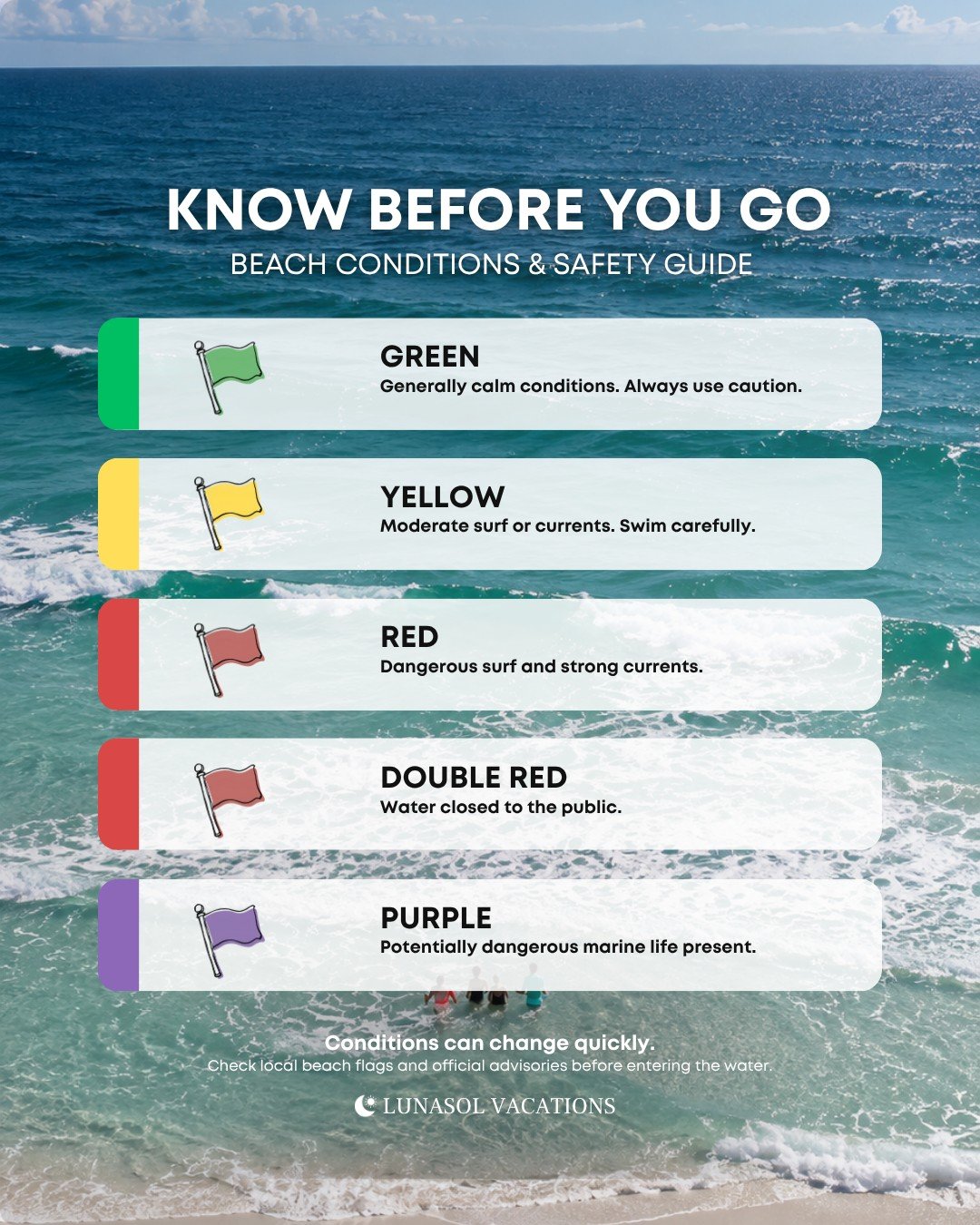
- Green — Low hazard. Generally calm conditions. Currents and surf are minimal, but caution is always appropriate. A green flag is not a guarantee of safety.
- Yellow — Medium hazard. Moderate surf or currents are present. Swim carefully, stay close to shore, and keep a close eye on children and weaker swimmers.
- Red — High hazard. Dangerous surf and strong currents. Swimming is strongly discouraged. Even experienced swimmers can be caught off guard in red-flag conditions.
- Double Red — Water closed to the public. Entry into the water is prohibited. This is a legal restriction on Escambia County beaches, not a suggestion. Violators can be fined.
- Purple — Dangerous marine life present. Jellyfish, stingrays, or other marine life have been spotted in the area. Purple is often flown alongside another flag rather than alone.
Flag systems and local enforcement rules vary by destination. Always check with the lifeguard station or the local beach authority when you arrive, especially if you're visiting a beach you haven't been to before.
Understanding Rip Currents and Changing Surf Conditions
Rip currents are the leading weather-related hazard on U.S. beaches. According to the U.S. Lifesaving Association, rip currents account for more than 80 percent of rescues performed by surf beach lifeguards. They form when water pushed toward shore by waves finds a narrow path back out to sea — typically through a break in a sandbar or near a pier or jetty. The current can move faster than most people can swim.
A few things worth knowing:
- Rip currents are hard to see. Look for a channel of choppy, discolored water moving away from shore, or a line of foam and debris heading seaward. But they're often invisible from the beach.
- Don't fight the current. If you're caught in a rip current, swim parallel to shore until you're out of the pull, then angle back toward the beach. Trying to swim directly against it exhausts most swimmers quickly.
- Conditions change fast. A calm morning can turn rough by early afternoon, especially during summer storm season. Check the flag before every swim, not just when you arrive.
The National Weather Service office in Mobile, Alabama covers the Pensacola area and issues rip current outlooks and beach forecasts. You can check current conditions at weather.gov/mob and the dedicated beach forecast at weather.gov/beach/mob.
Beach Safety Tips Before You Go
A little preparation before you leave the rental makes a real difference at the beach.
- Check the flag before you swim. Flags are posted at lifeguard stands and beach access points. If you don't see a flag, ask a lifeguard or check the official beach conditions page for your destination.
- Swim near a lifeguard. Staffed beaches in Pensacola Beach are monitored by Escambia County Beach Safety. Stay within the designated swim zones where lifeguards have a clear line of sight.
- Follow posted restrictions. Double red flags and beach closures are enforced. Ignoring them puts you and potential rescuers at risk.
- Tell someone your plan. If you're going in the water, let someone on shore know where you'll be swimming and when you expect to be back.
- Check the weather before you go. Afternoon thunderstorms are common on the Gulf Coast from June through September. Lightning clears the beach fast — plan your swim for the morning if storms are in the forecast.
- Respect the surf, even on calm days. Sneaker waves — larger-than-expected waves that arrive without warning — can knock adults off their feet in knee-deep water.
Checking Beach Conditions in Pensacola Beach and Perdido Key
For current flag conditions, rip current risk, and beach access information specific to Pensacola Beach and Perdido Key, use these official sources rather than social media or general weather apps.
- Escambia County Beach Safety (Pensacola Beach): The county's lifeguard services page at myescambia.com/pensacola-beach/pensacola-beach-lifeguards posts current flag conditions and lifeguard hours. You can also sign up for flag-change text alerts by texting PBFLAGS to 888777.
- National Weather Service — Mobile/Pensacola: The NWS office at weather.gov/mob issues marine forecasts, rip current outlooks, and active weather alerts for the Pensacola area.
- NWS Beach Forecast: weather.gov/beach/mob provides rip current risk levels, UV index, and water temperature for Gulf Coast beaches.
- Perdido Key: Perdido Key beaches fall under Florida State Parks and Escambia County jurisdiction depending on the specific access point. Check with the Perdido Key Area Chamber of Commerce or the relevant park authority for current conditions before your visit.
Conditions at both destinations can change quickly, particularly during and after tropical weather events. Always verify current beach access and flag status through official sources on the day of your visit. Our Pensacola & Perdido Key Weather Updates page links to all the official local resources in one place.
If you're planning a trip and want to know more about what each destination offers, our Pensacola Beach guide and Perdido Key guide cover the beaches, neighborhoods, and things to do in both areas. Families visiting the coast may also find our Family Fun guide useful for planning beyond the beach.
Frequently Asked Questions
What does a red flag mean at the beach?
A red flag signals high hazard conditions — dangerous surf and strong currents. Swimming is strongly discouraged when a red flag is flying. If you're unsure whether it's safe to enter the water, ask the lifeguard on duty.
Can you swim when a yellow flag is flying?
You can, but you should swim carefully. Yellow means moderate surf or currents are present. Stay close to shore, avoid going out past your depth, and keep a close watch on children. Conditions can shift from yellow to red quickly.
What do double red flags mean?
Double red flags mean the water is closed to the public. On Escambia County beaches, this is a legal restriction — not a recommendation. Entering the water when double reds are flying can result in a fine, and more importantly, it puts you and any would-be rescuers in serious danger.
What does a purple beach flag mean?
Purple indicates dangerous marine life in the area — most commonly jellyfish or stingrays on Gulf Coast beaches. Purple is often flown alongside another flag. It doesn't mean the water is closed, but you should take extra care and watch where you step in the shallows.
Does a green flag mean the water is completely safe?
No. A green flag means conditions are generally calm and hazards are low — but no flag eliminates risk entirely. Rip currents can form even on calm days, and the ocean is always unpredictable. Swim near a lifeguard, stay within your ability, and keep an eye on changing conditions regardless of the flag color.
Plan a Safer Coastal Getaway
Knowing the flags is one part of a safe beach trip. The other part is having a home base close enough to the water that you can check conditions, head out early, and come back when the afternoon storms roll in.
LunaSol Vacations manages vacation rentals on Pensacola Beach and Perdido Key — properties within walking distance of the Gulf, with the kind of local knowledge that comes from being on the ground year-round. If you're planning a trip to the Gulf Coast, browse our available homes or reach out to our team with questions about specific properties or current local conditions.


